
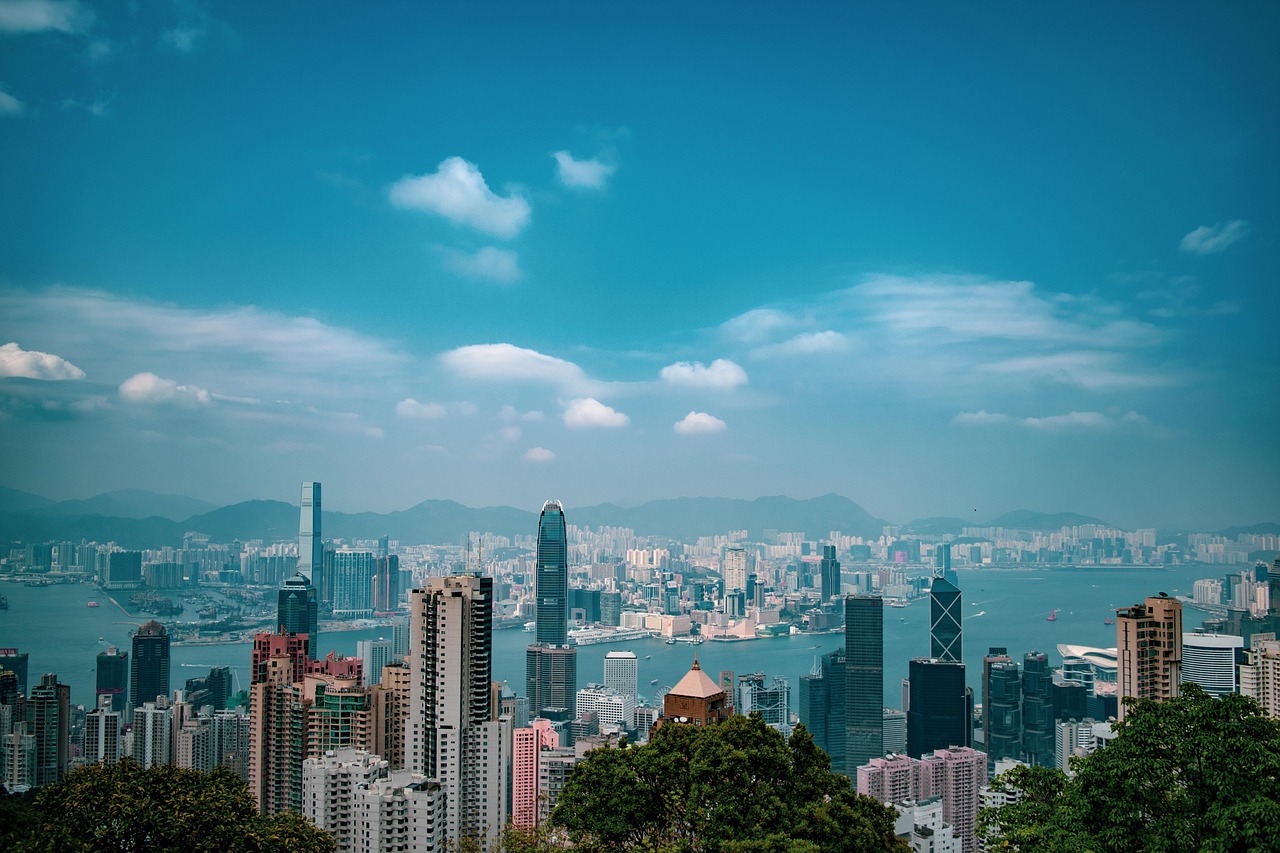
- A tax haven is a jurisdiction with policies, such as low tax rates, aimed at attracting foreign investors, entrepreneurs, and businesses.
- Disadvantages of tax havens include reputational damage and experiencing a relatively lower quality of life common in many low tax jurisdictions.
- When selecting a tax haven country for residence and work, key considerations include tax rate, banking secrecy, residence requirements, infrastructure, and political stability.
- Some of the best offshore tax havens to live and work in are Hong Kong, Singapore, Switzerland, the Netherlands, and the Cayman Islands.
- Why is Hong Kong a tax haven?
| Population Size | 7.52 Million |
| Corporate Tax Rate | - 8.25% for first 2 million, 16.5% for profits thereafter - 0% tax rate for foreign-sourced income |
| Income Tax Rate | Progressive, capped at 17% |
| Economic Growth | GDP growth for 2025 projected to be between 2 and 3% |
| Ease of Bank Account Opening for Foreigners | While traditional banks require in-person bank interviews, Fintech options provide completely remote bank account opening options |
| Banking Secrecy | - Hong Kong banks strictly observe their duty of secrecy. - However, under the Common Reporting Standard, HK banks can report information to foreign authorities. |
| Monthly cost of living for individuals | - Ranges from USD2,500-4,000 (Depends on housing expenses) - Key costs include housing and food |
| Requirements for Residency | -Investment does not automatically confer residency rights. -Strict requirements apply (e.g. 7 years of ordinary residence in Hong Kong) |
- Why is Singapore a tax haven?
| Population Size | 6.113 Million |
| Corporate Tax Rate | - Corporate tax rate is a flat rate of 17% - Start-ups may be eligible for a maximum corporate tax exemption of 50%-75% on part of the chargeable income for a duration of 3 years |
| Income Tax Rate | Progressive, capped at 24% |
| Economic Growth | GDP growth for 2025 projected to be 1.5-2.5% |
| Ease of Bank account Opening for Foreigners | In-person bank interviews is a standard requirement, but Fintech options provide completely remote bank account opening options |
| Banking Secrecy | - Robust banking secrecy laws prohibit the unauthorised disclosure of customer information to third-parties - In the wake of financial crises, Singapore is under increasing international pressure to align with AML regulations and financial transparency regimes |
| Monthly cost of living for individuals | USD1,245 - USD7,780 |
| Requirements for Residency | - The Global Investor Programme (GIP) grants permanent residency to eligible foreign investors - The required investment approximately ranges from USD7.7 million to USD38.6 million |
- Why is Switzerland a tax haven?
| Population Size | 9.05 Million |
| Corporate Tax rate | - Corporate tax rate ranges from 11% and 21%, significantly lower than that of other European countries - Multiple cantons offer tax holidays for newly established businesses for up to 10 years |
| Income Tax Rate | Progressive, with the total effective income tax rate ranging between 22.1% to 45.5%, depending on location and income level for cantonal and communal taxes |
| Economic Growth | GDP growth for 2025 projected to be 1.3% |
| Ease of Bank account Opening for Foreigners | - The foreigner’s nationality and deposit amount are factors that influence chances of account opening - in-person interviews are generally required |
| Banking Secrecy | - Having signed agreements like FATCA after the 2008 financial crisis, Switzerland’s banking secrecy has come to an end. - Banks must now share account information with tax authorities |
| Monthly cost of living for individuals | For individuals, monthly cost of living ranges from USD3100-USD6200 |
| Requirements for Residency | - Investment does not automatically confer residency rights. - Strict requirements apply (e.g. 5-10 years of residence in Switzerland on a valid residence permit) |
- Why are the Netherlands a tax haven?
| Population Size | 18.1 Million |
| Corporate Tax Rate | -19%-25.8% - VAT at standard rate of 21% while exemptions apply to certain businesses |
| Income Tax Rate | Progressive, capped at 49.5% |
| Economic Growth | GDP growth for 2025 projected to be 1.3%, mainly driven by household spending |
| Ease of Bank account Opening for Foreigners | Common requirements include a Dutch business, a Dutch business address, and in-person interviews. |
| Banking Secrecy | - Rather than being codified in Dutch law, banking secrecy is an implied general principle that forms the very culture of the Dutch banking sector. - Banks are still required to disclose customer information at the request of authorities. |
| Monthly cost of living for individuals | USD2,000- USD2,200 |
| Requirements for Residency | -Investment does not automatically confer residency rights -The Startup Scheme offers a one-year residence permit for innovative ventures that have the support of a Dutch facilitator. |
| Population Size | 0.09 Million |
| Corporate Tax rate | 0% |
| Income Tax Rate | 0% |
| Economic Growth | GDP growth for 2025 projected to 2.6% |
| Ease of Bank account Opening for Foreigners | - Extensive documentation must be submitted for due diligence purposes - Many banks allow non-residents to open accounts without traveling to the islands by submitting certified documents electronically or by mail. |
| Banking Secrecy | - Though historically a pillar of banking secrecy, the Cayman Islands has recently aligned itself with international efforts to fight money laundering and terrorism. - Financial data can be shared with international authorities. |
| Monthly cost of living for individuals | USD2,500 - USD4,000 |
| Requirements for Residency | Multiple programmes offer foreigners with substantial business presence and investments in the Islands residency rights |
| Country/Region | Estimated Monthly Cost of Living (Single Individual) | Source Type | Notes |
| Hong Kong | HK$8,500 - HK$9,000 (~USD 1,090 - 1,150) | HK Census & Statistics Dept, PKF Hong Kong | Excludes rent; rent is typically HK$10,000-HK$25,000 for 1-bedroom apartments |
| Singapore | SGD 1,500 - SGD 2,000 (~USD 1,100 - 1,470) | Singapore Government Statistics, PwC Singapore | Inclusive of food, transport, utilities; rent varies widely by location and lifestyle |
| Switzerland | CHF 3,500 - CHF 4,000 (~USD 3,900 - 4,450) | Swiss Federal Statistical Office, Deloitte Switzerland | High living costs, especially for housing and health insurance |
| Netherlands | EUR 1,400 - EUR 1,800 (~USD 1,500 - 1,930) | Dutch Government, EY Netherlands | Varies between cities; includes utilities, food, transportation |
| Cayman Islands | USD 3,800 - USD 4,500 | Cayman Islands Gov & PwC Cayman | High housing and grocery costs; utilities expensive due to island location |